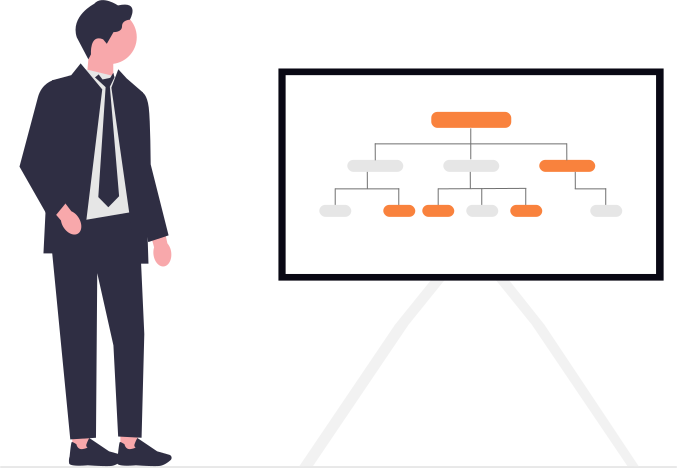
The steps, one by one
- Claim. The employee submits each expense with the bill, the date, the amount, the category and the business reason.
- Policy check. The claim is checked against your expense policy: allowed category, daily limits, travel class, and whether a bill is attached.
- Manager approval. The reporting manager confirms the spend was for work and reasonable.
- Finance check. Finance verifies the bill, the GST details where input credit is claimed, and the coding to the right ledger and cost centre.
- Higher approval when needed. Claims above the manager’s limit, or outside policy, go to the next approver named in your approval matrix.
- Reimbursement. Approved claims are paid in the next payment run, and any advance taken earlier is adjusted.
Setting approval limits
Set limits by amount and by category, not one number for everyone. A common pattern is: the reporting manager approves routine claims up to a set amount, a department head approves above that, and finance or the CFO approves exceptions and anything outside policy. Write the bands into your approval matrix so every claim follows the same path.
Published delegation-of-powers documents show the same instinct: limits for writing off or waiving money are much smaller than limits for spending it. See approval limits in 18 published documents.
An India-focused checklist
Adapt it to your own policy. A common starting point:
- A bill for every claim above a small threshold, kept with the claim.
- If you claim GST input credit, a proper tax invoice in the company’s legal name and GSTIN, not in the employee’s name.
- Travel and hotel within the class and city limits in your policy.
- Advances recorded against the employee and adjusted against the final claim.
- One claim per bill: the same bill should never be paid twice.
- A claim window, for example within 30 days of the spend, so old claims do not pile up.
Where it usually breaks
- Claims sent on email or WhatsApp with photos of bills, and nobody can find them at year end.
- The same bill submitted twice, or in two months.
- Approvals given by the person who made the claim, or by whoever was available that day.
- Policy limits that exist in a PDF but are never checked on the claim.
- Advances that are never adjusted, so balances sit open for months.
- Slow approvals: people wait weeks to be repaid and stop following the process.
What to automate first
- A claim form with the bill attached, the category chosen from a list and the business reason required.
- Routing by amount and category from your approval matrix, with reminders and escalation when a claim waits too long.
- A check that flags a bill that has already been claimed.
- A second approver for claims outside policy.
- An audit trail of who submitted, checked and approved each claim.
How this looks on Averoic
On Averoic, an expense claim is a form with the bill attached. It routes to the right approvers by amount and category, with reminders and escalations when a step waits too long, and finance sees the approved claims on a dashboard ready for payment. The same approval building blocks run purchase order and invoice approvals. Every step lands in a complete, time-stamped audit trail, configured without code.
This guide is general information, not tax, legal or audit advice. Your expense policy, approval limits and tax treatment must come from your own policies and professional advisers.
Works with alternative lenders, AIFs, NBFCs and insurers in India on approvals, maker-checker controls and audit readiness.
See how your own process would run on Averoic — configured, not coded, with maker-checker controls and a complete, time-stamped audit trail built in.
Frequently asked questions
What is an expense approval process?
The steps a company uses to check and approve money employees spend on its behalf before reimbursing them: a claim with the bill, a policy check, manager approval, a finance check, and payment.
Who approves expense reports?
Usually the employee’s reporting manager first, then finance. Claims above the manager’s limit or outside policy go to a department head, the CFO or whoever your approval matrix names.
What should an expense approval limit be?
There is no standard. Set limits by amount and category from your own policy and size, with a lower limit and a second approver for anything outside policy.
What documents are needed for an expense claim in India?
A bill or receipt for each expense, the business reason, and for any GST input credit a proper tax invoice in the company’s legal name and GSTIN. Your policy decides the details.
How do you stop duplicate expense claims?
Keep every bill with its claim in one system and check new claims against bills already paid, by vendor, date, amount and invoice number.
How long should expense approval take?
For a routine claim, a few days at most. Set a time limit for each approver and escalate claims that wait longer.